Puttgarden ⇄ Rødby · 45 min · about 19 km
Crossing review: our Puttgarden Rødby ferry trip, step by step
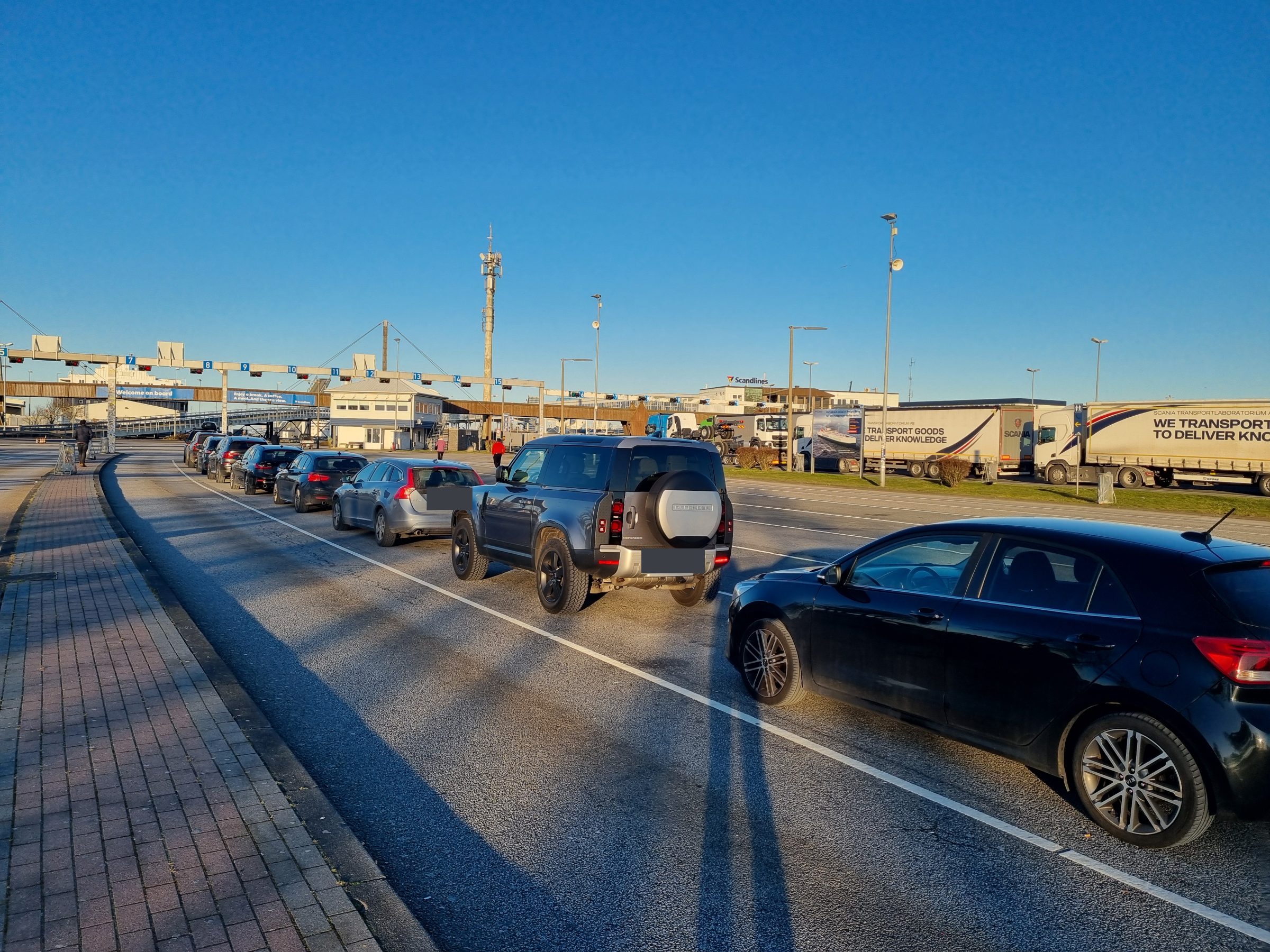
February 2025, late afternoon. We were in the waiting lane at Puttgarden with the car, after a day on the road from the Netherlands, with Copenhagen as the goal for that evening.
Booking online avoids the handling fee of at least €15 at the harbour.Book online & save at least €15
This is how the crossing to Rødby went, from booking at home to driving off in Denmark, with our own photos, so you know what to expect.
Taking this ferry for the first time? Then you probably have questions: where do I go, when should I be there, what if I am early. Hence this report. Everything below comes from our own crossing from Puttgarden to Rødby: Bram and Robbert of FerryGoGo, two people in one car. Where something differs by ticket or by season, we say where to check it.
1. Preparation: ticket, times and a small bag for upstairs
- Book ahead. Online is cheaper than at the harbour, and the cheap Low Price ticket is not sold at the harbour at all. Every ticket and what it allows is on the prices page.
- Pick a sailing with margin. By day there is a ferry about every 40 minutes, but a long drive rarely runs to the minute. With a Standard ticket you take the next ferry with space on the same day; Low Price is valid for the booked departure only. Today’s sailings are in the timetable.
- Pack a small bag for upstairs: something to eat and drink, a windproof jacket for the deck, a phone charger. What is in the car stays there until Rødby.
- Look at the weather. The Fehmarnbelt is open water, and in a strong westerly the crossing can roll. Wind and waves for the route are on the page about weather and sea conditions.
- Check your car alarm. Many cars have motion or tilt sensors that go off when the ship moves. On most makes you can switch them off before you lock the car.
This is the story of one crossing. Current times, fares and practical information are on the pages we link to.
2. The drive to Puttgarden
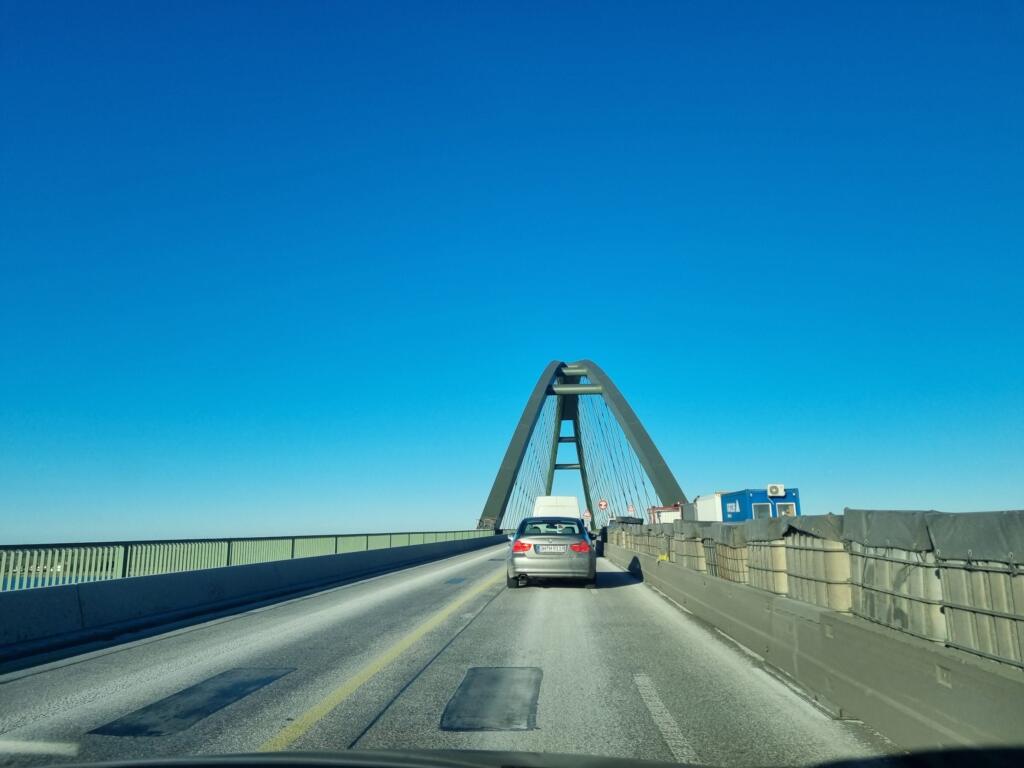
We left the FerryGoGo office in Zeist early on a Monday morning and reached Puttgarden after roughly six and a half hours. The roads were quiet and, unusually for Germany, there were hardly any roadworks.
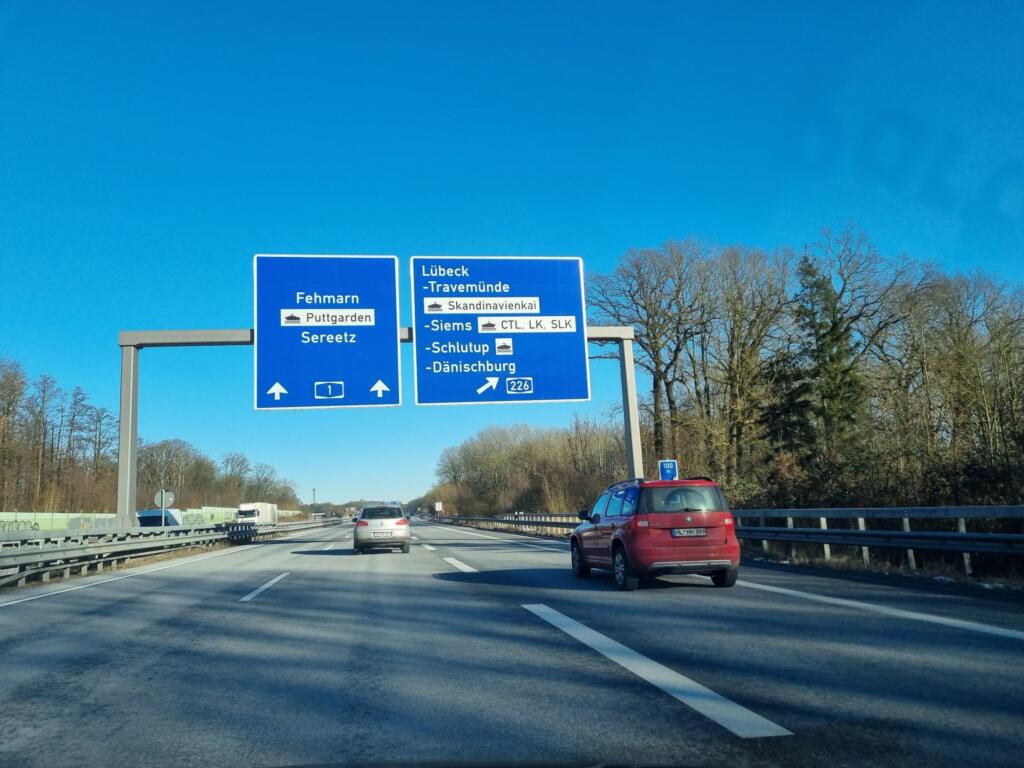
You do not need to memorise the route. From Hamburg the A1 runs to Lübeck, and where the motorway ends it continues as the E47 over the Fehmarnsund Bridge, across the island and straight on to the port. Puttgarden is on the signs well before Lübeck. From Hamburg it is about 160 km and two hours to the check-in.
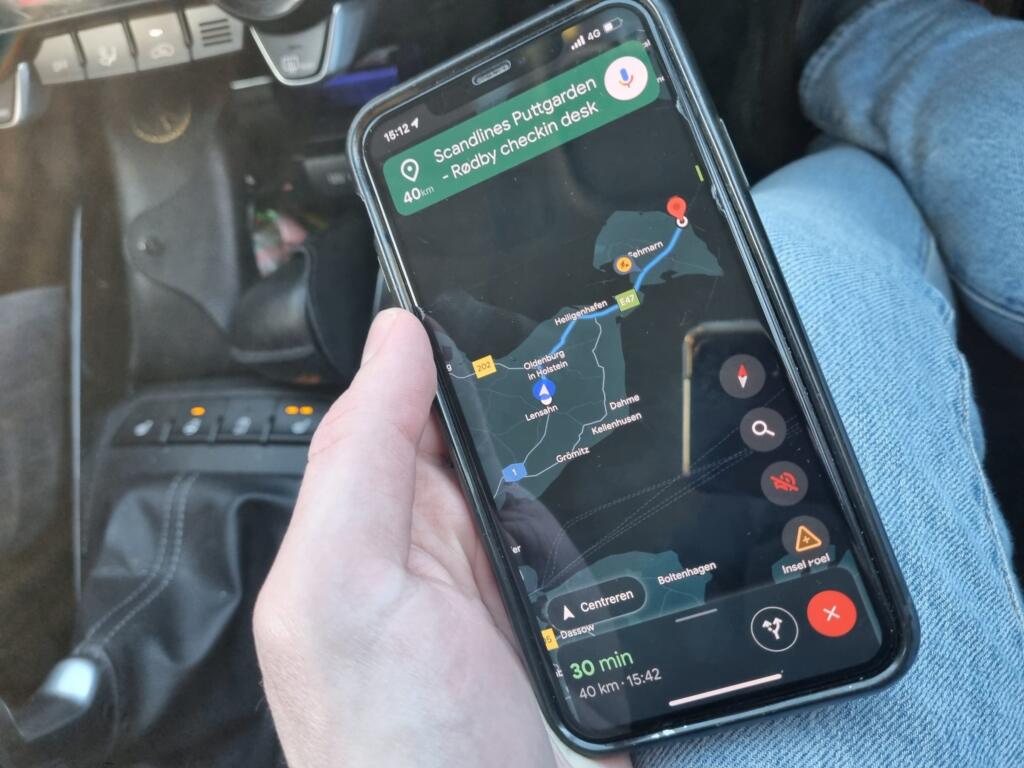
Do not trust the sat nav blindly. Around Hamburg the A1 over the Elbe bridges and the A7 with the Elbe tunnel often jam, and in the summer holidays so do the last kilometres across Fehmarn. On our trip the sat nav still showed 30 minutes to “Scandlines Puttgarden, Rødby Check-in” after the Fehmarnsund Bridge.
More on the approach and on staying overnight on Fehmarn is on the page about Puttgarden ferry port.
3. At the port: the BorderShop first, or straight into the lane
No ticket yet? Online or in the app you can book up to two hours before departure.
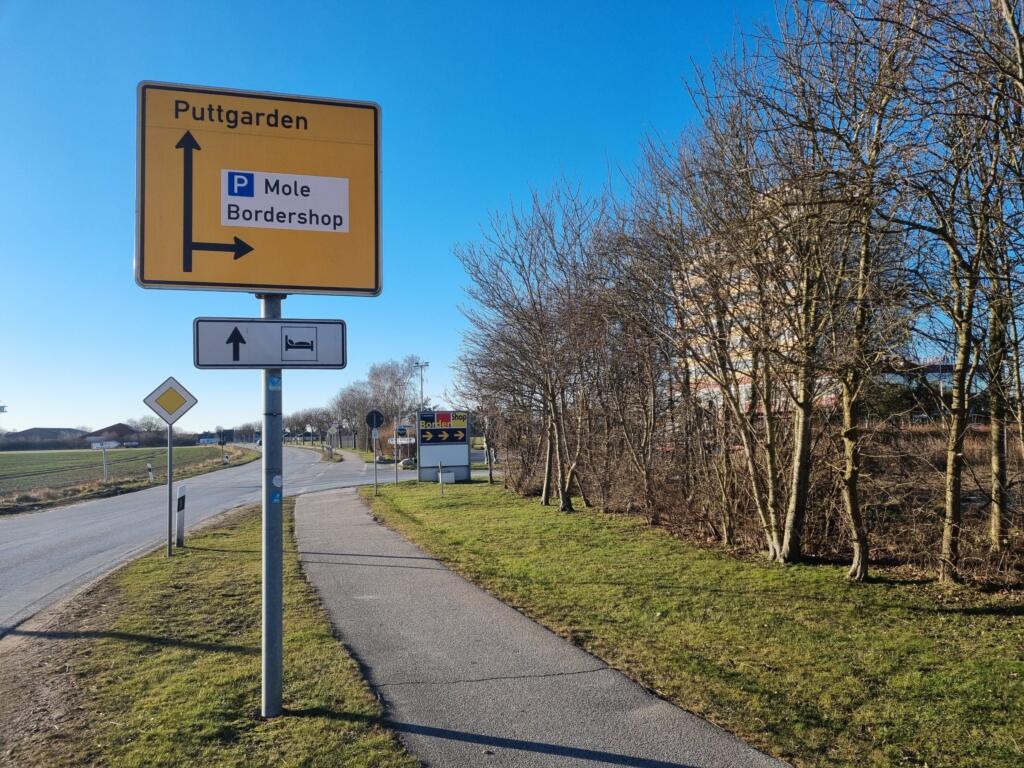
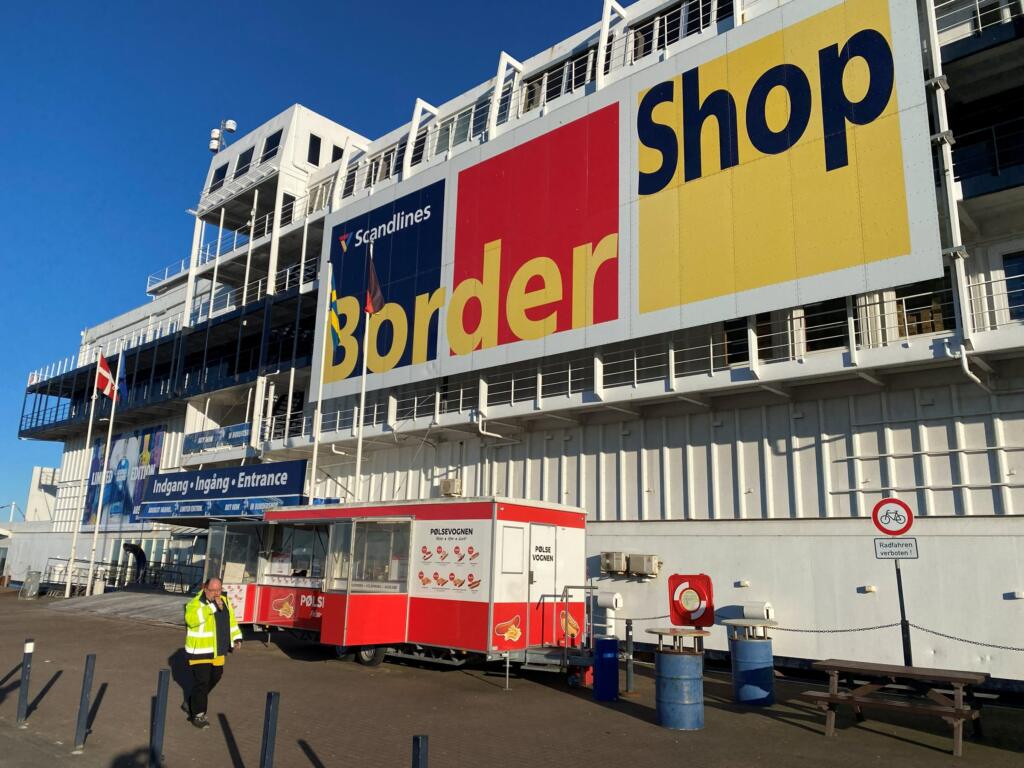
We had time to spare, and then the BorderShop pulls you in. It sits right next to the check-in lanes and is marked with big yellow arrows, so you can hardly miss it. It is a shop of several floors that lives mostly off Danes and Swedes stocking up on wine, beer and spirits, because duties in Scandinavia are a good deal higher. The rows of trolleys and the size of the car park tell you enough.
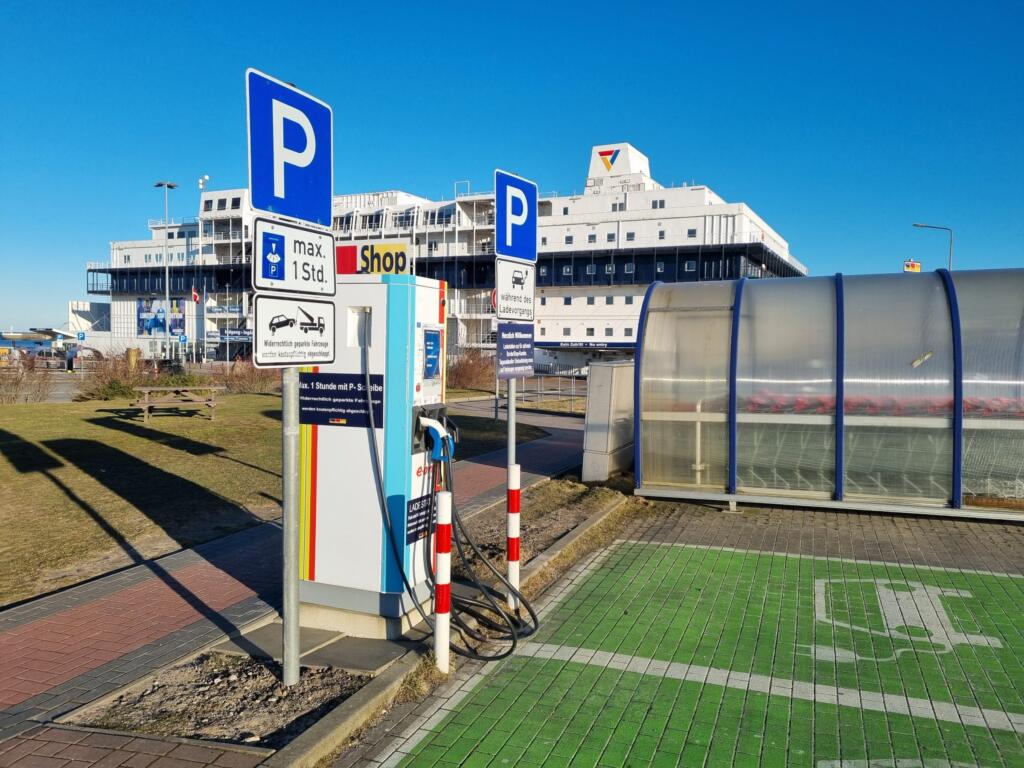
We walked around for half an hour before checking in. You can park for an hour, and there is a charging point for electric cars at the entrance. Do it before the check-in: once you are in the waiting lane there is no way back. Opening hours and what you may take with you are on the page about the BorderShop Puttgarden.
The village of Puttgarden itself is a little further on and has little to offer. Not shopping? Then drive straight to the check-in. With a Standard or Flex ticket you can often take an earlier sailing than the one you booked on a quiet day.
4. Check-in: do it yourself, at the booth
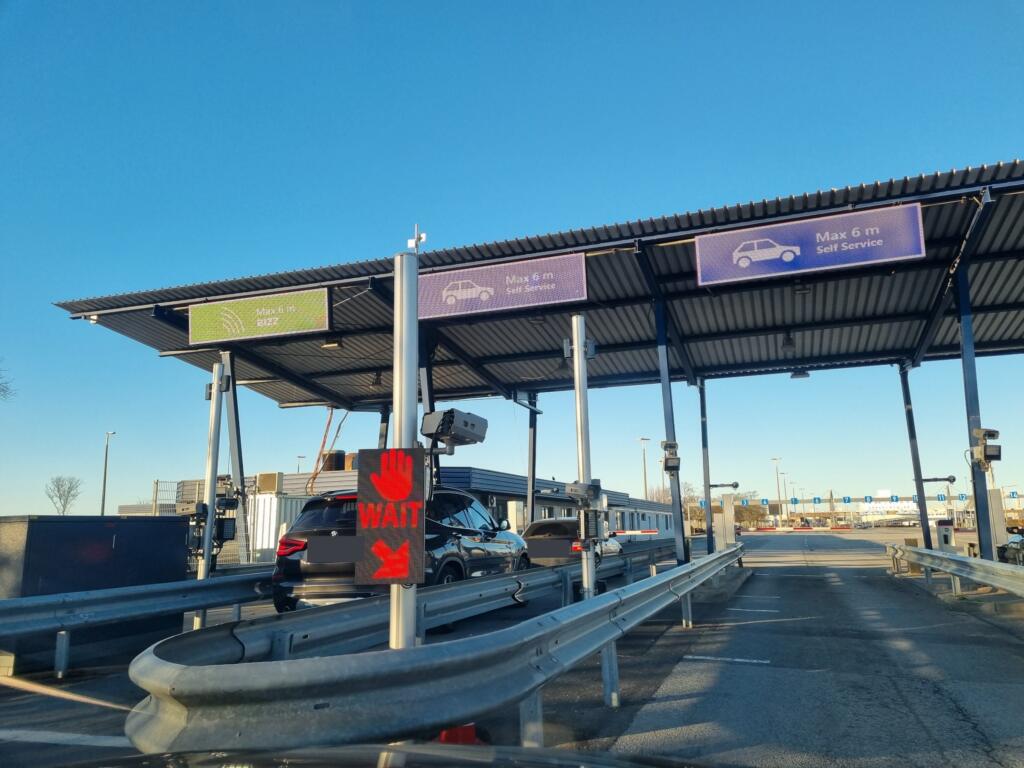
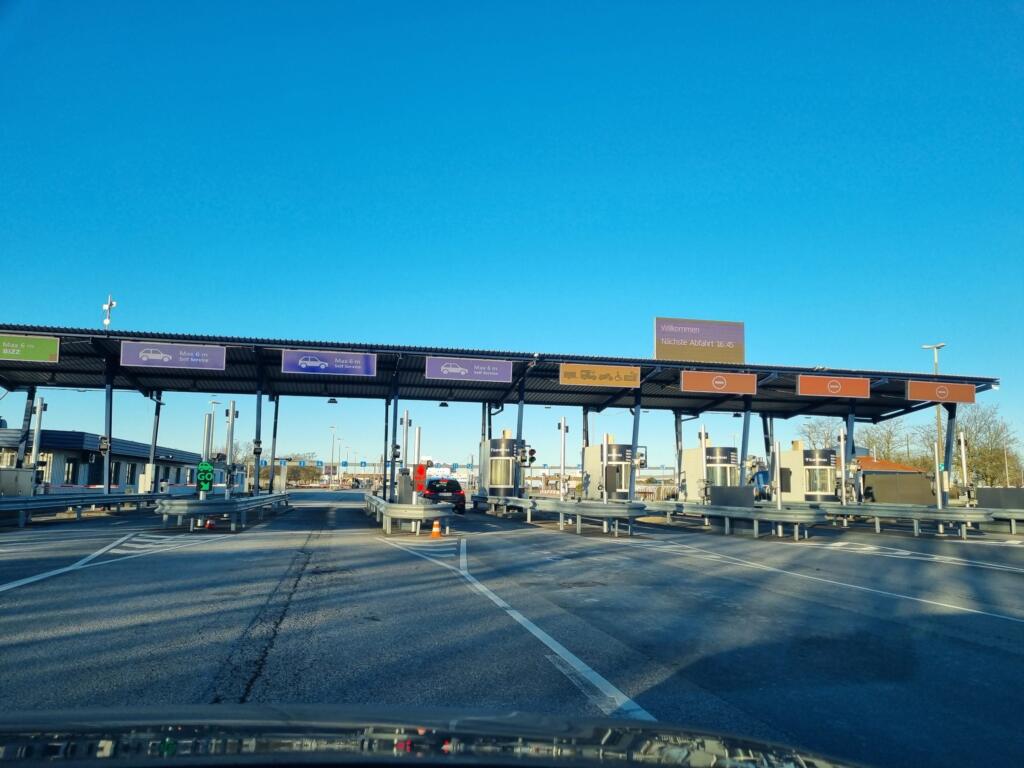
With a ticket in your pocket the check-in more or less runs itself. Under a canopy there is a row of self-service booths, each lane for a vehicle length (“Max 6 m Self Service”) and one for BroBizz transponders.
A red hand on the post says WAIT as long as the car in front of you is still at the booth. Then it is your turn: hold your booking code under the scanner, or let the camera read your licence plate, and the screen tells you which numbered waiting lane to drive to. For us that took a minute.
When do you need to be there? Check-in for cars closes 15 minutes before departure. Allow 30 minutes yourself, and a little more with a motorhome or caravan or in the holidays.
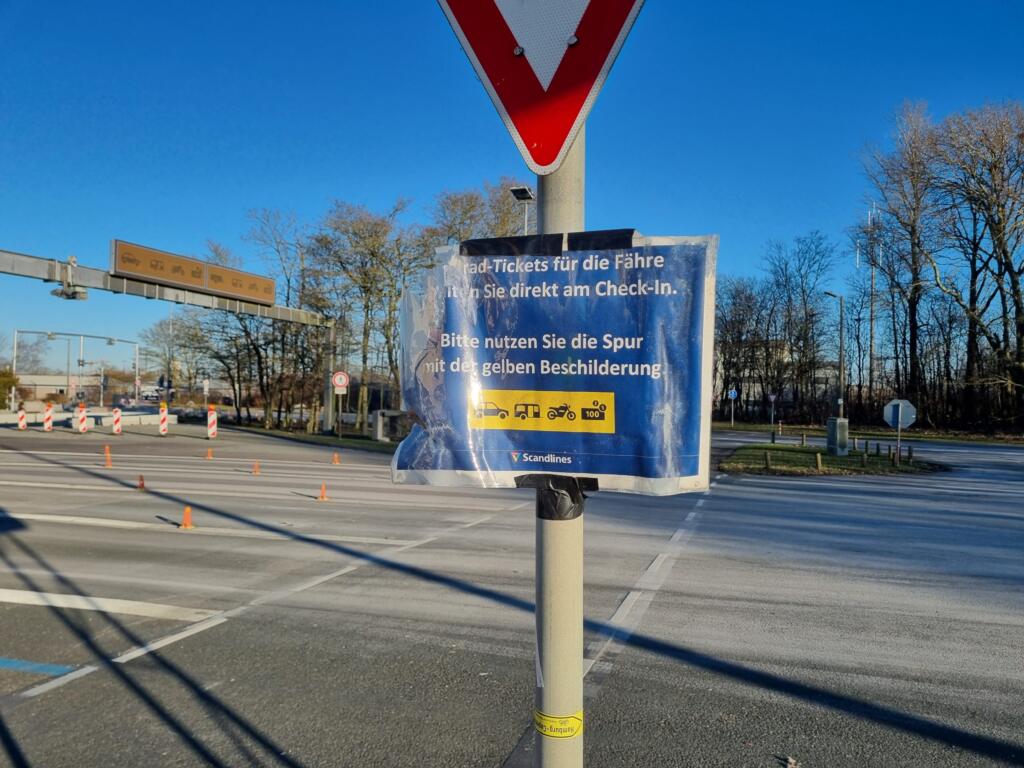
Without a ticket you go to the desk at the end of the check-in area and pay the harbour price.
5. Waiting and driving on board
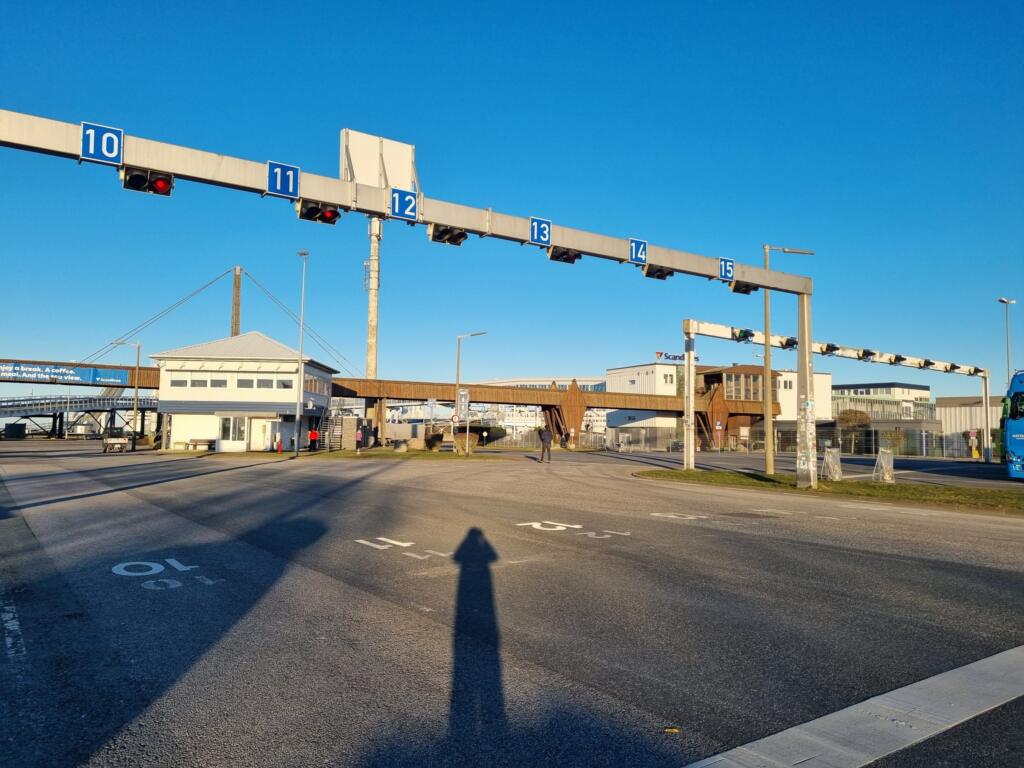
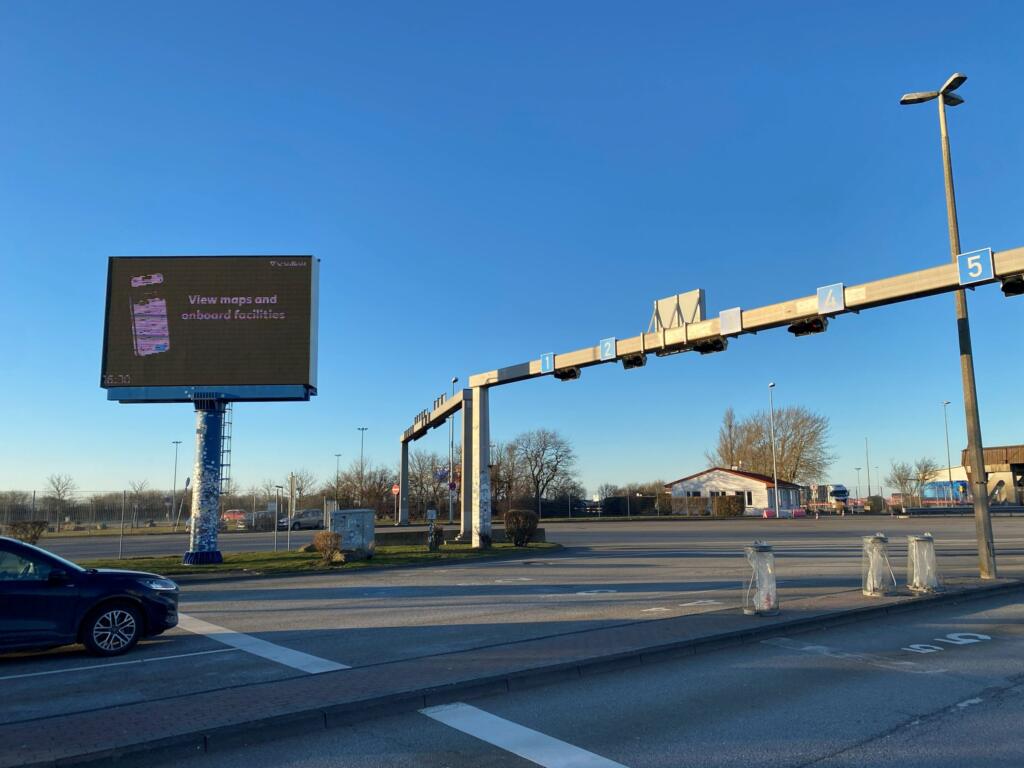
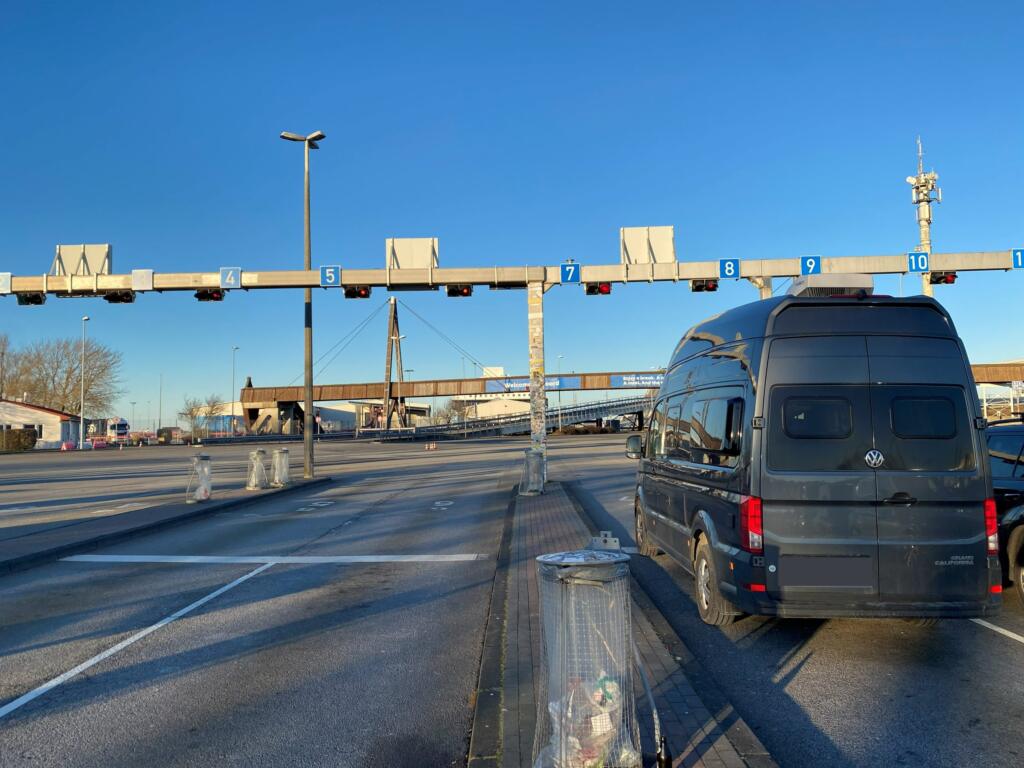
From the booth you drive on to your waiting lane, under a gantry with lane numbers and traffic lights. A screen shows the next departure. When we were there in February it was quiet: a few cars and a motorhome ahead of us, no more. As soon as your ferry is ready, the light above your lane turns green, you drive onto the ship and the crew points you to a place.
There is no reversing or turning involved. The ferries are double-ended: you drive on at one end and straight off at the other in Rødby.
6. The crossing: 45 minutes, outside if the weather allows
Handbrake on, alarm sensors off, and up the stairs. Staying in the car is not an option: the car deck closes as soon as the ship sails.
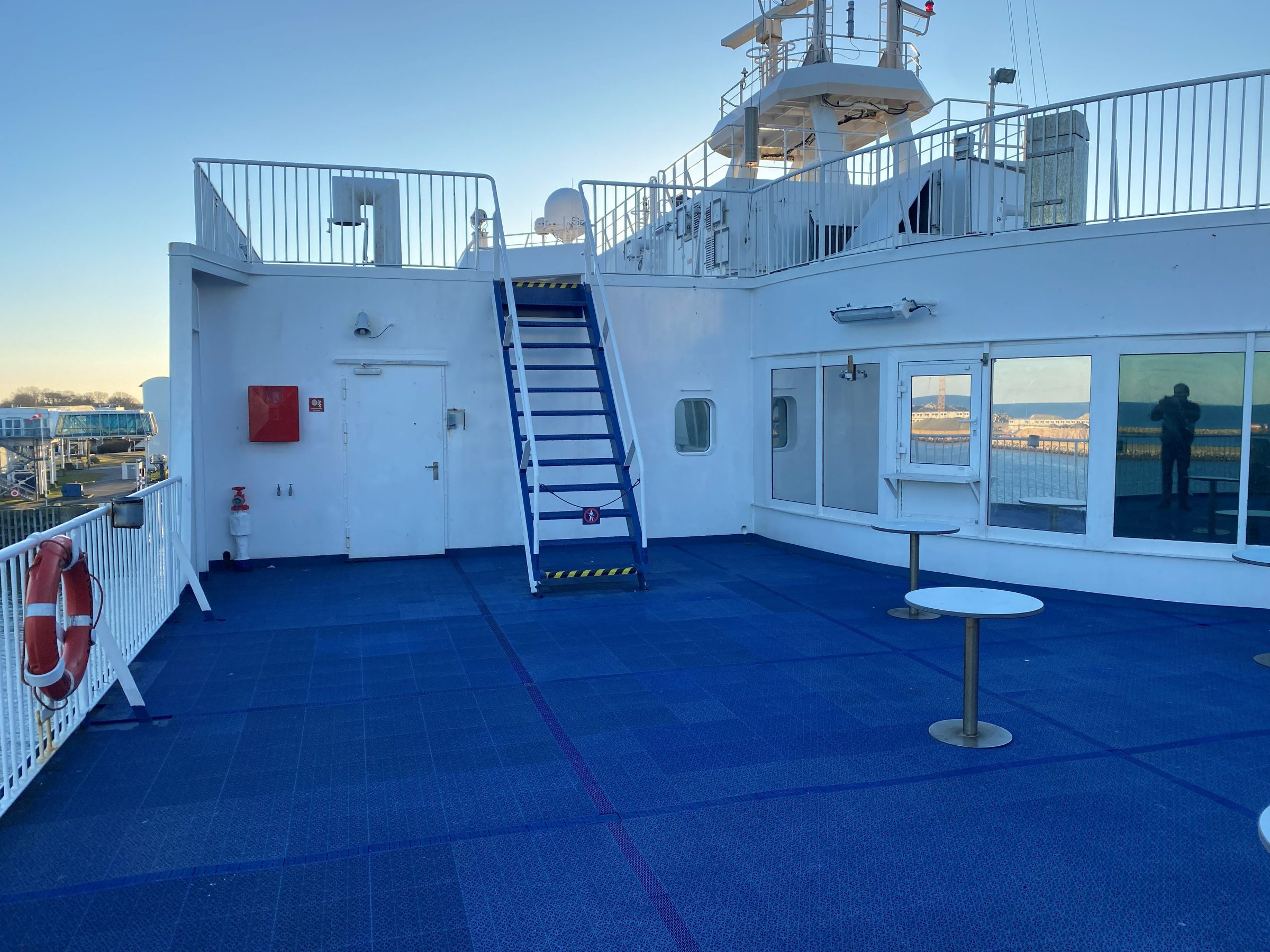
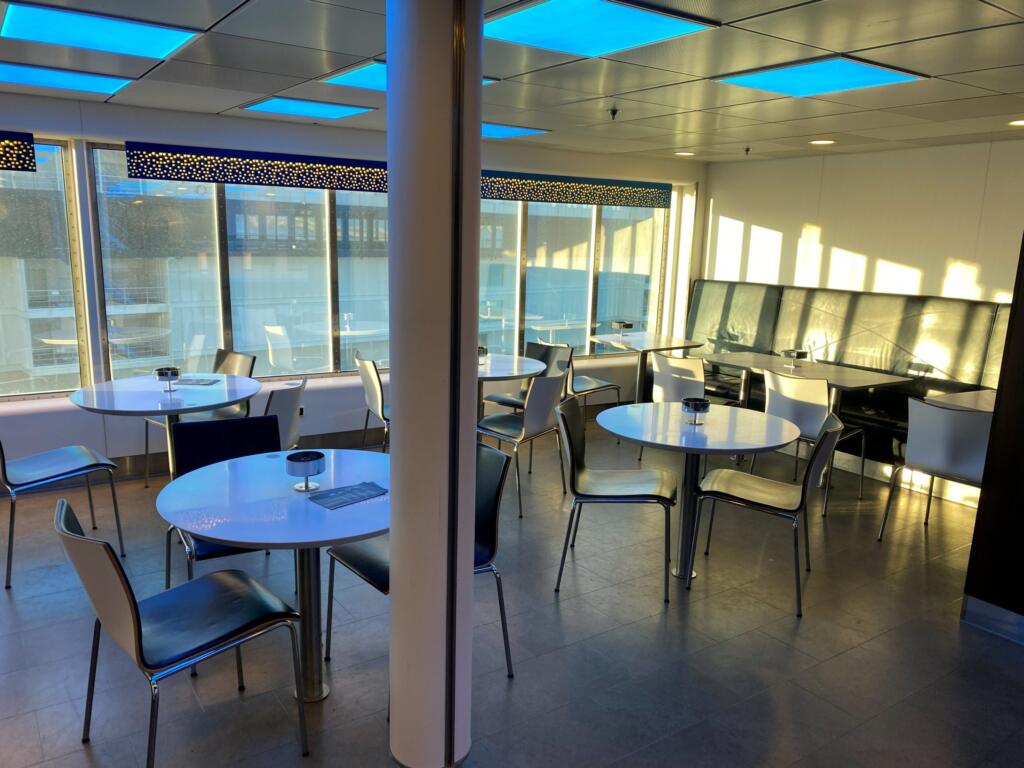
Upstairs you can choose: Food Express (hot dogs, sandwiches, chips), a coffee bar, a small shop or the lounge with panorama windows. Right after departure the queue at Food Express is at its longest, because everyone comes up from the car deck at once; ten minutes later it has gone.
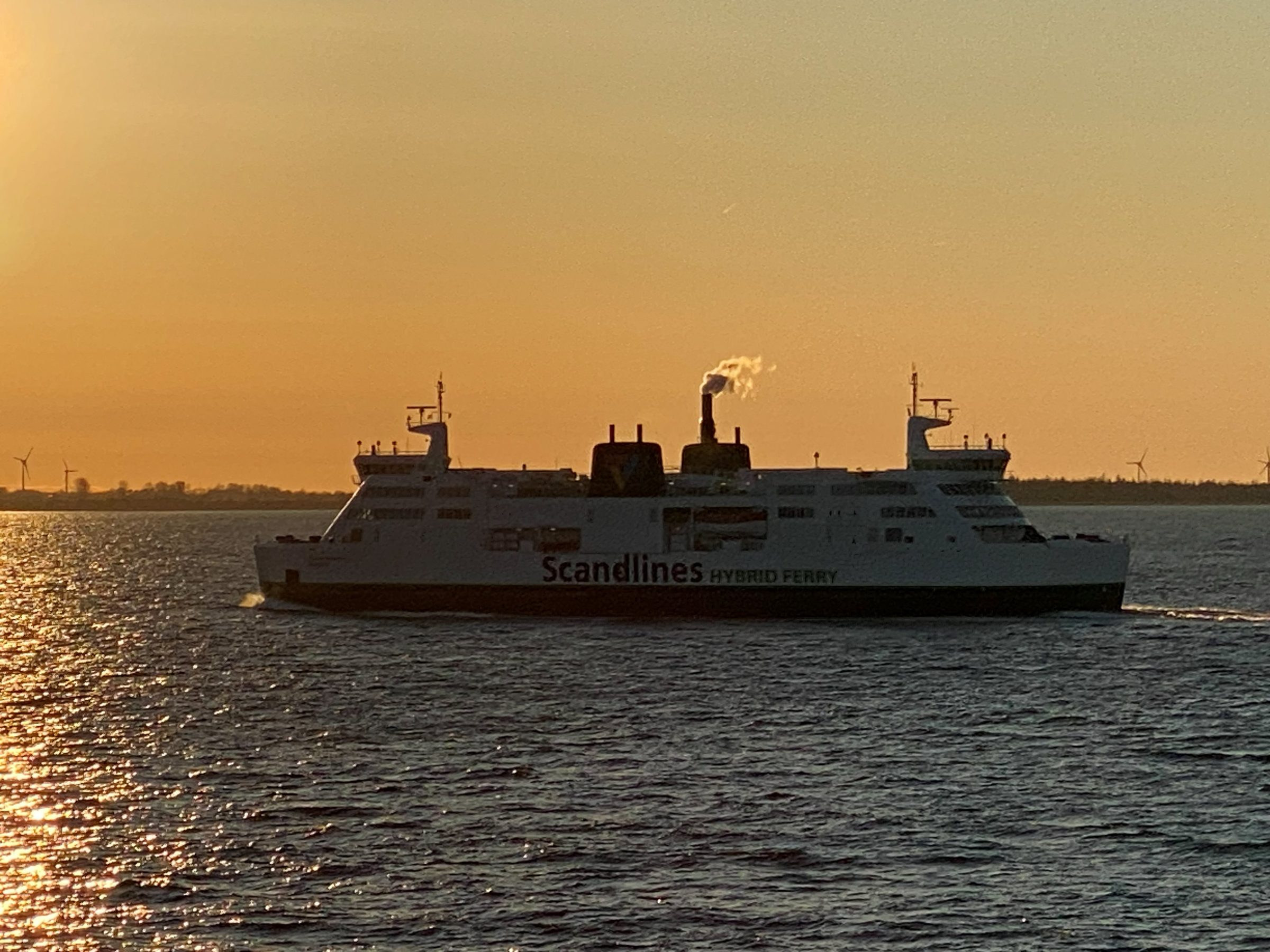
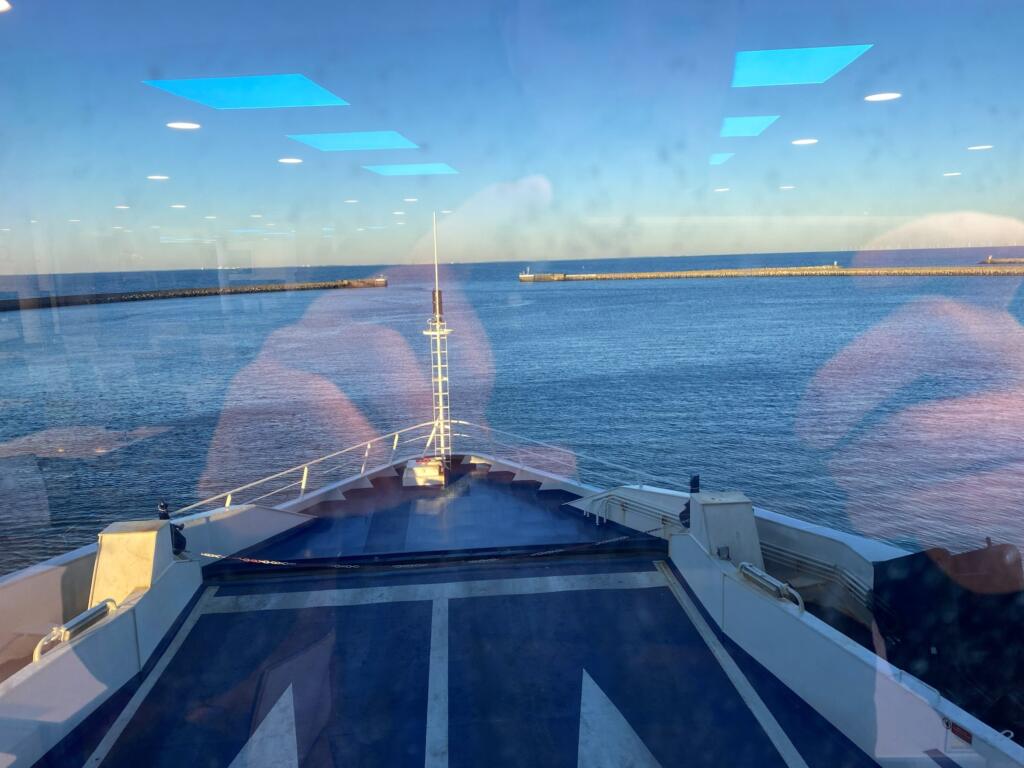
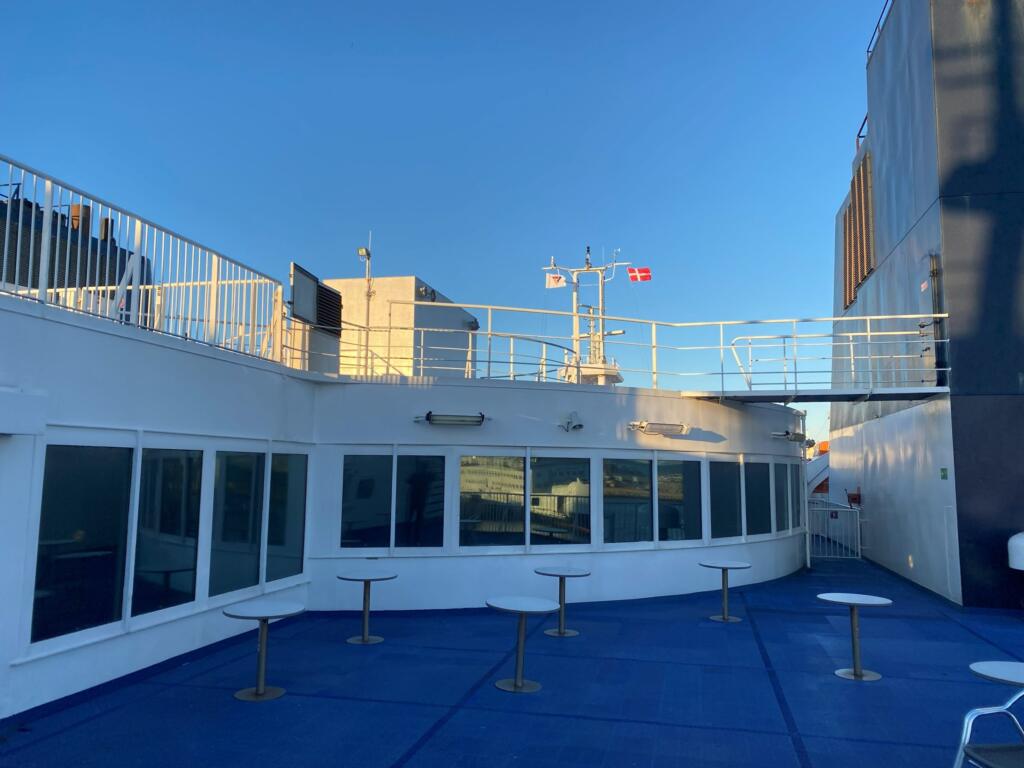
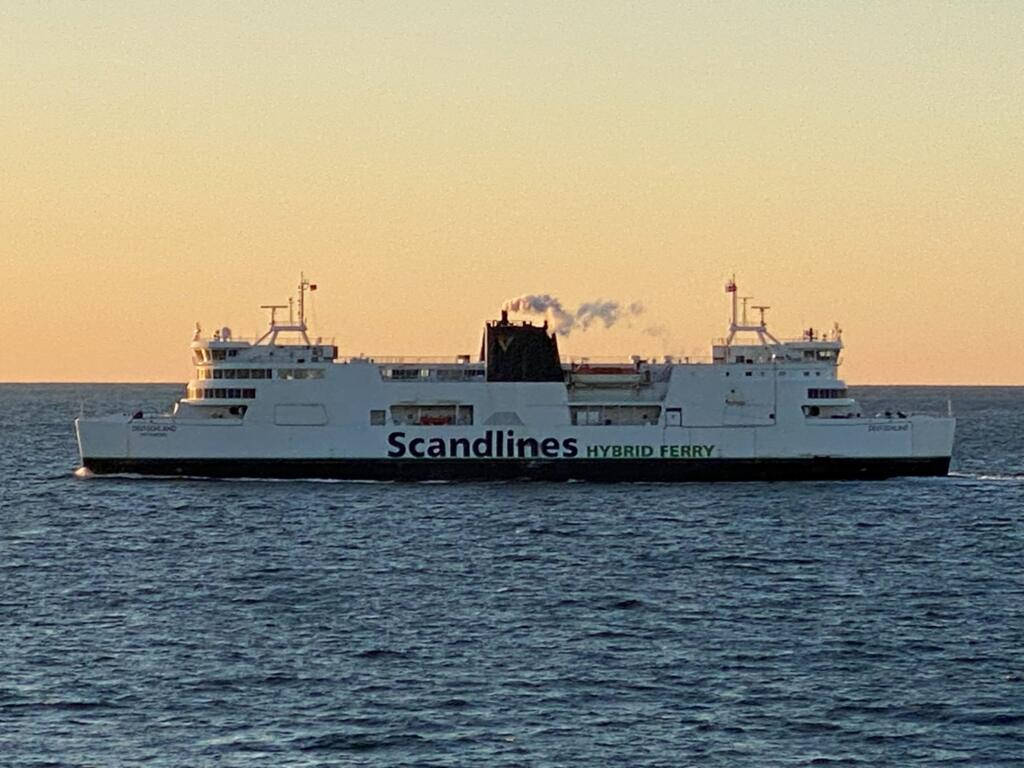
We skipped the queue and took two cold beers outside, and as far as we are concerned that is simply the better choice. From the sun deck we watched Fehmarn disappear behind us, and halfway across the sister ferry from Rødby came past.
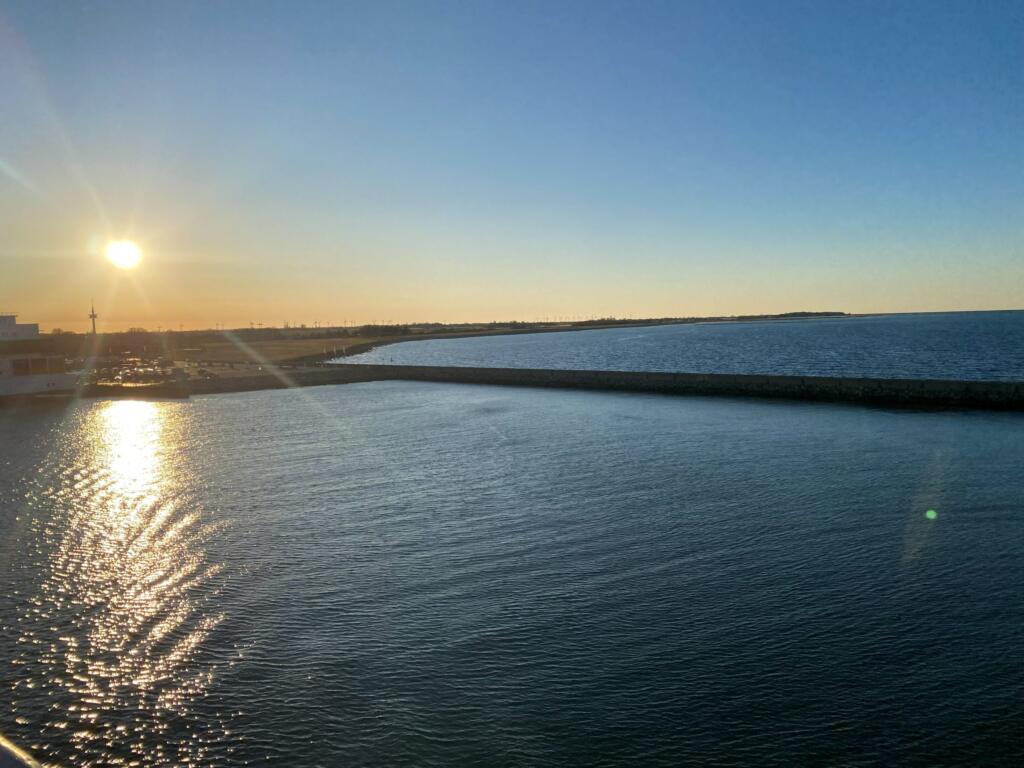
Ours was the last sailing in daylight. The sun set over the Belt with the other ferry as a silhouette in front of it, and on the Danish side the cranes of the tunnel works at Rødbyhavn came into view.
Everything there is on board, with photos of every corner, is on the page on board the ferry.
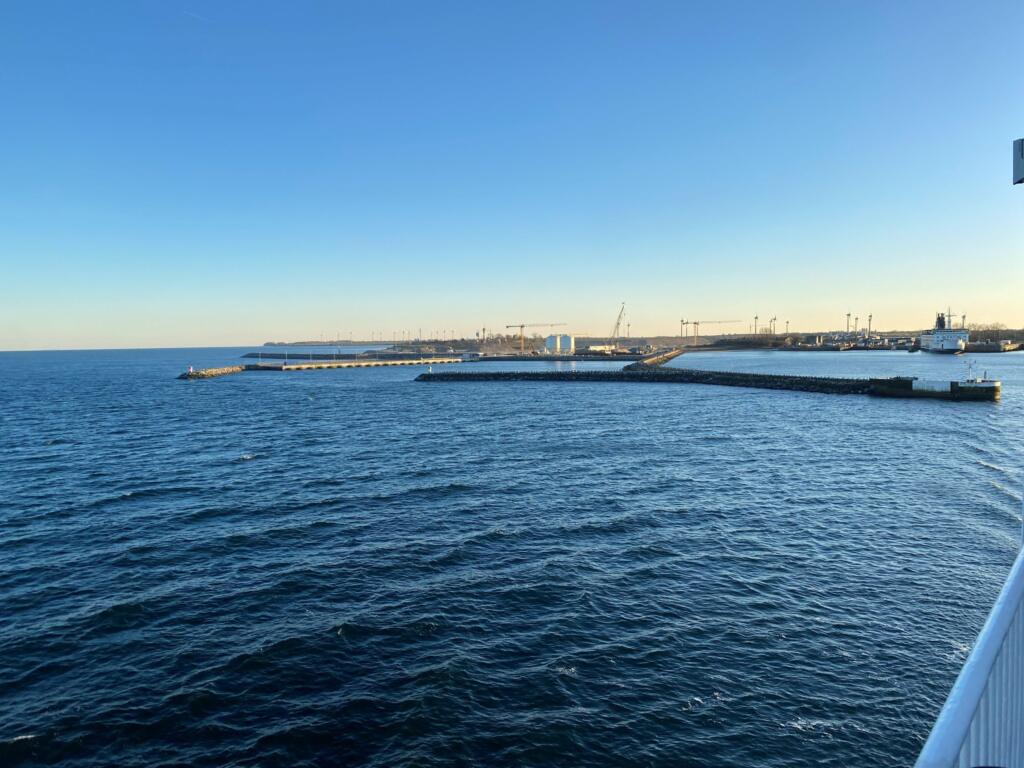
7. Off the ferry in Rødby and on to Copenhagen
A few minutes before docking an announcement calls you back to the car. You wait there until the crew gives the signal and then drive off calmly. There is no border check that stops everyone, but Denmark does spot checks, so keep your passport or ID card at hand.
Within a few minutes you are on the E47 and the ferry is already a memory. Copenhagen is about 160 km and an hour and a half away. That is what we liked most about this route: instead of one very long drive, the day falls into manageable parts. Drive, ferry, drive, arrive.
What there is to find in Rødby itself is on the page about Rødby ferry port.
8. The rest of the trip: a bridge, a second ferry and another way home
The crossing was the first leg of a route test through Denmark and Sweden. Three things we took from the rest of it:
- The Øresund Bridge is the direct way to Malmö. We drove it the next morning with a ticket bought in advance: no waiting, no boarding. How the ferry and the bridge go into one booking is on ferry plus Øresund Bridge.
- Helsingør Helsingborg suits a route further north. We came back to Denmark on this short ferry, about 20 minutes, with Kronborg Castle in view as you arrive in Helsingør. See ferry plus Helsingør Helsingborg.
- Ticket flexibility matters. We reached Helsingborg much earlier than planned, and our ticket did not allow another departure. The choice was to wait for hours or buy a new ticket; we bought a new one.
The day after that we drove home through Gedser and Rostock, the other ferry between Denmark and Germany and a crossing of about two hours. When that route is the better one is on the page about alternatives.
Puttgarden Rødby crossing: frequently asked questions
What is the Puttgarden Rødby crossing like?
Short and practical: about 45 minutes from quay to quay, enough for a coffee or some fresh air on deck. It works as a break in the drive more than as a ferry trip in its own right.
Do I have to book in advance?
It is not required, but booking online ahead is usually cheaper. Without a booking you pay the harbour price. Online and in the app you can book up to two hours before departure.
Can I stay in the car during the crossing?
No. The car deck is closed during the crossing and all passengers go upstairs. Take with you what you need.
Can I take an earlier ferry if I arrive early?
With a Standard or Flex ticket usually yes, as long as there is space. With Low Price no: that ticket is valid for the booked departure only.
Should I switch off my car alarm on the ferry?
Preferably. Motion and tilt sensors can go off because the ship moves, and on many makes you can switch them off before you lock the car.
Making the crossing yourself? Current fares are shown directly in the booking.
Booking online avoids the handling fee of at least €15 at the harbour.